
Introduction
In today’s data-rich but insight-poor world, the ability to measure, evaluate, and optimise organisational capabilities is not just beneficial—it’s essential. This is where the Capabilisense Platform enters the scene, redefining how enterprises assess, understand, and transform their operations using assessment frameworks underpinned by a knowledge graph.As businesses grapple with fragmented data, siloed departments, and complex transformation goals, the Capabilisense platform offers a unified, intelligent approach designed for precision decision-making and performance optimisation.Whether you’re a transformation lead, enterprise architect, or learning & development strategist, this deep dive will help you understand what sets Capabilisense apart, why its architecture matters, and how it empowers real-time capability evolution.
What Is the Capabilisense Platform?
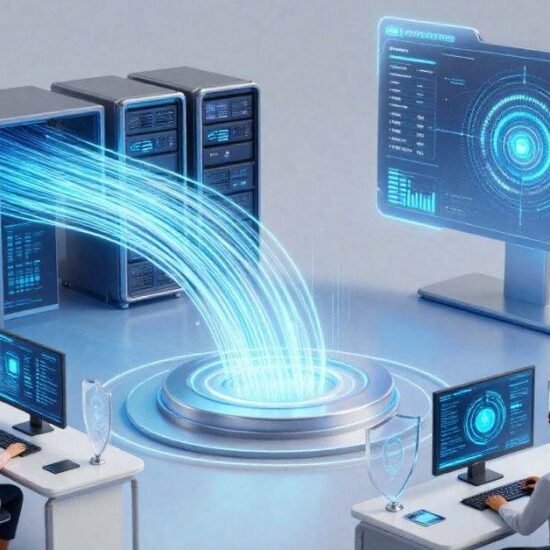
At its core, Capabilisense is a capability assessment and knowledge platform that allows organisations to model, assess, and relate operational capabilities using flexible, interconnected data structures. Think of it as a semantic web of everything your organisation knows, does, and needs to do better.
Key Capabilities:
- Assessment Framework Integration: Plug in maturity matrices, learning rubrics, risk catalogues, and more.
- Dynamic Knowledge Graph: Relates everything from KPIs to roles to strategic objectives contextually.
- Context-Aware Assessments: Real-time feedback loops powered by smart data relationships.
Unlike linear spreadsheets or static scorecards, Capabilisense evolves as your organisation learns.
The Role of Knowledge Graphs in Capabilisense Platform Sense
Imagine trying to model a modern organisation—a living ecosystem of people, tools, practices, and promises. Traditional data structures fall short in capturing non-linear relationships between multiple layers of value. That’s where knowledge graphs step in.
Why It Matters:
Capabilisense relies on a graph-based backend to contextualise and connect:
- Capabilities
- Competencies
- Metrics
- Goals
- Assessment results
This structure isn’t just technical elegance—it enables real-time semantic reasoning across the entire knowledge base.
| Factor | Traditional Platforms | Capabilisense (Knowledge Graph) |
| Data Relationship Handling | Linear & fixed | Flexible, contextual |
| Real-Time Integration | Limited | Dynamic updates |
| Cross-Domain Linking | Hard-coded | Native to platform |
By embedding knowledge graphs, Capabilisense ensures alignment across frameworks, making the invisible visible—and actionable.
How Capabilisense Revolutionises Capabilisense Platform Assessment
Most organisations rely on outdated assessment templates or ad hoc surveys, resulting in inconsistent insights and limited scalability. Capabilisense flips this approach with intelligent, continuously learning assessment engines.
Deep Dive:
- Customisable maturity models (e.g., CMMI, SFIA)
- Crowd-sourced inputs from teams with weighted relevance
- Hyper-contextual feedback nested within each assessment line
- AI assistance for goal-setting based on benchmark data
This moves assessments from one-off events to live organisational health metrics. Leaders no longer wait for quarterly reviews—they get intelligent insights instantly.
Example in Practice:
A global telco uses Capabilisense Platform to assess its digital readiness across 5 regions, collecting over 1,200 assessment points daily, mapped to strategic initiatives in real-time.
Framework Interoperability: A Game-Changer
One of Capabilisense Platform most strategic advantages is its support for multiple assessment frameworks and meta-models simultaneously.
Supported Frameworks Include:
- CMMI
- TOGAF
- SFIA
- COBIT
- Balanced Scorecard
- Custom in-house rubrics
This allows organisations to overlay different lenses—tech maturity, skills mapping, risk posture—without duplication or rework.
| Feature/Framework | Capabilisense Support | Benefit |
| Mixed Frameworks | ✅ | Holistic Org View |
| Custom Model Imports | ✅ | Tailored to Industry/Company Needs |
| Assessment Harmonization | ✅ | 1 Insight Feed from Multiple Inputs |
No more “tool soup”. Capabilisense unifies your frameworks into a single strategic intelligence layer.
Key Features Designed for Decision-Makers
Modern executives need more than dashboards—they need strategic intelligence suites that connect assessments to outcomes. Capabilisense delivers a suite aimed squarely at C-suite and transformation leaders.
Executive-Ready Highlights:
- Real-Time Capability Heatmaps
- Role-Based Result Views (HR, Ops, Risk, etc.)
- Scenario Simulation (“What happens if…?”)
- Objective-Level Tracking
“I can now see exactly how our people, platforms, and processes align—and most critically—what the gaps are.” – Fortune 500 CIO
Data-Driven Insights vs. Traditional Methods
Legacy assessment models often fall short in quantifying impact. Capabilisense applies data science and inference logic to maximise learning per data point.
Example Comparison:
| Attribute | Traditional Assessments | Capabilisense Assessments |
| Static Scores | ✅ | ❌ |
| Dynamic Feedback Loop | ❌ | ✅ |
| Graph Intelligence | ❌ | ✅ |
| Persona-based Reporting | Limited | Advanced |
Capabilisense helps leaders see not just ‘what’ the capability score is, but ‘why’ it matters and what to do next.
Use Cases Across Industries
Capabilisense isn’t limited to one industry; its modular, adaptive structure supports verticals from manufacturing to financial services to public sector transformation.
Notable Deployments:
- Healthcare Providers: Mapping patient care delivery processes and digital enablement.
- Defence Organisations: Competency alignment to operational readiness.
- Financial Institutions: Risk & resilience assessments tied to regulatory frameworks.
Illustration – Capable Sense in the Public Sector:
text
Goal: Improve digital inclusivity
Mapped: Staff digital skills, service accessibility benchmarks, role architectures
Result: Increased digital engagement scores by 37% in 6 months
The platform speaks your operational language—automatically.
Capabilisense vs. Other Capability Platforms
Many vendors offer some form of capability assessment—but few offer a unified semantic graph, a truly personalised assessment interface, and fully integrated framework support.
| Capability Platform | Assessment Depth | Knowledge Graph | Multi-Framework | Auto-Learning |
| Traditional LMS | Low | ❌ | ❌ | ❌ |
| Capability Mapping Tools | Medium | ❌ | Limited | ❌ |
| Capabilisense | High | ✅ | ✅ | ✅ |
Capabilisense is not just a tool—it’s an intelligence engine.
Implementation: What Businesses Need to Know
One of the most common questions is, ‘How hard is it to set this up?’
Good news—Capabilisense takes a phased onboarding approach and offers easy integrations.
Deployment Model:
- Hosted SaaS or private cloud
- Initial capabilities register import
- Framework alignment workshops
- Self-assessment cycles launch in <30 days
It also offers APIs and connectors for existing learning systems, HR platforms, and ITSM tools.
Already using SAP SuccessFactors, Workday, or ServiceNow? Capabilisense connects right in.
Future Trends and Roadmap
The innovation doesn’t stop. Capabilisense is advancing to incorporate:
- GenAI-Powered Recommendations
- Natural-Language Querying (Chat-to-Assessment)
- Blockchain-based Assessment Auditing
- Ethical AI Scoring for Demographic Fairness
Expect a smarter, more autonomous future—a living capability ecology where assessment becomes a strategic advantage.
2026 Update Coming Mid-Year: AI-driven team modelling release planned for Q3.
FAQs
What is the Capabilisense platform used for?
It’s used to model and assess enterprise-level capabilities using dynamic, knowledge-driven frameworks.
Is Capabilisense industry-specific?
No, it’s designed to be cross-industry and highly customisable.
Can our existing assessment framework be used?
Yes, it supports both standard and custom frameworks.
Does Capabilisense require technical installation?
Typically, no—it’s SaaS-ready with optional on-premise deployment.
How long does it take to see actionable insights?
Most clients gain transformative insights within the first 30 days.
Conclusion
The Capabilisense platform rethinks how businesses understand and grow their capabilities. With its knowledge graph architecture, assessment intelligence, and multi-framework support, it offers a smarter path to operational transformation and workforce alignment.