
Introduction
In today’s hyperconnected world, human relationships are often reduced to statistics: followers, likes, engagement rates, résumés, and rankings. While metrics help us navigate large-scale systems, they fail to capture the richness of lived experiences and the unquantifiable nuances of genuine connection.
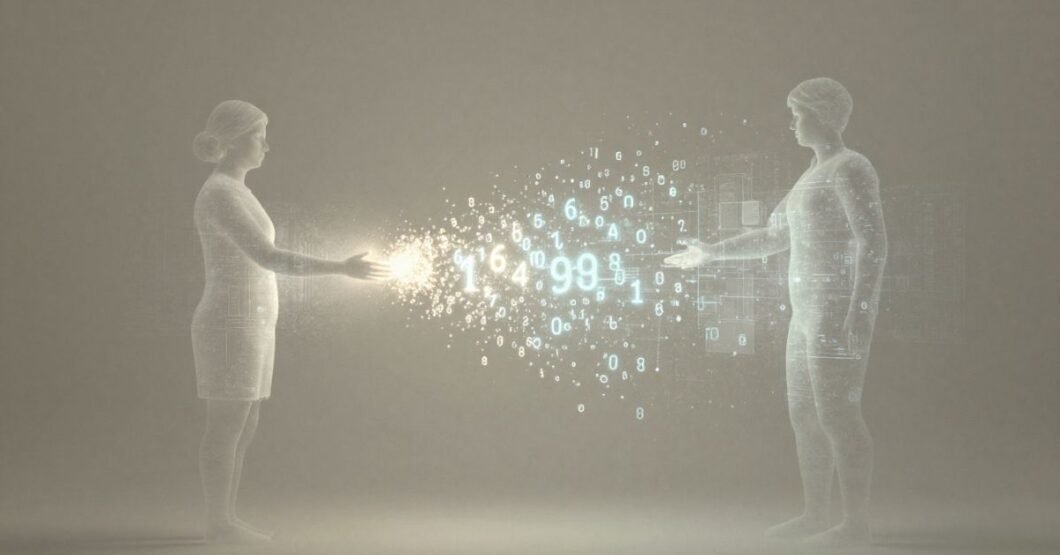
Disquantified contact challenges that model — it’s a social philosophy and practice centred on connecting people beyond numbers and labels. It reimagines how we engage with one another, prioritising presence over popularity, experience over credentials, and meaning over measurement.
This article explores the growing movement toward disquantified communication, its implications for society, work, and everyday life, and how you can cultivate deeper, more human-centred interactions in an age increasingly shaped by algorithms and data.
What Is Disquantified Contact? A New Understanding of Connection
At its core, disquantified contact refers to human interactions that occur outside the framework of quantifiable identifiers. That means without regard for status metrics, roles, achievements, or social scoring systems.
It’s about recognising people:
- Not by their follower count…
- Not by their résumé…
- Not by how “useful” they are to us professionally…
…but by their shared humanity.
While the term may sound abstract, disquantified contact is grounded in accessible ideas: authenticity, compassion, mutual recognition, and presence. By eliminating predefined labels and numeric comparisons, people are free to engage with one another on a more natural and empathetic level — just as humans.
The Rise of Quantification in Human Relationships
Quantification has become the dominant social lens in the 21st century. From dating apps that assign attractiveness scores to professional networks like LinkedIn showcasing endorsement numbers, identity is often defined by digital statistics.
According to a Pew Research Center (2023) study:
78% of adults feel pressured to present a “curated version” of themselves online to meet social expectations.
How Quantification Shows Up:
| Platform | Quantified Metrics |
| Likes, followers, views | |
| Connections, endorsements, job titles | |
| Tinder/Bumble | Swipe count, match scores |
| Work & Education | GPA, certifications, performance data |
This growing reliance on metrics creates a culture of transactional relationships, where people often equate value with visibility or productivity. The danger? Genuine connection is lost in the noise.
Why Numbers Don’t Tell the Whole Story
While data can track trends and provide helpful summaries, they rarely reflect human complexity. Numbers can’t fully communicate:
- A person’s emotional intelligence
- The depth of someone’s resilience
- The nuance of a conversation
- The kindness behind an action
For instance, two LinkedIn profiles might suggest one candidate is “better” based on education or job title, but the candidate with fewer credentials might be a better listener, collaborator, or leader — all traits that can’t be measured in numbers.
Disquantified contact resists these simplifications, emphasising qualitative depth over quantitative status.
Chart: What Numbers Measure vs What They Miss
| What’s Measured | What’s Missed |
| Follower count | Emotional support in tough times |
| Titles & awards | Humility and growth mindset |
| GPA or degrees | Creativity and critical thinking |
| Endorsements | Ethical integrity and empathy |
Disquantified Contact vs Traditional Networking: A Comparison
Let’s break down how traditional networking compares with disquantified contact in various social and professional contexts:
Table: Networking vs. Disquantified Contact
| Criteria | Traditional Networking | Disquantified Contact |
| Focus | Status, utility, gain | Mutual presence, authenticity |
| Metrics Considered | Credentials, referrals, titles | Shared experience, openness, vulnerability |
| Typical Environment | Job fairs, panels, LinkedIn | Safe spaces, local meetups, creative hubs |
| Interaction Goal | Transactional (get something) | Transformational (form something) |
The shift is from valuable contacts to valuing contact.
Technology, Social Media, and the Erasure of Authenticity
Modern technology magnifies quantification. Algorithms push content based on popularity, not authenticity. As a result:
- Voices with fewer followers are invisible.
- Performative behaviour is rewarded over realness.
- People start to measure their worth by engagement rates.
Example:
An artist might feel discouraged if their work gets 50 likes while another, more “algorithm-friendly” piece gets 50K — even if the former had deeper meaning.
Disquantified contact reminds us that a piece of art seen by one attentive person is more significant than being viewed by thousands who scroll past in 1.2 seconds.
Real-World Scenarios: Where Disquantified Contact Makes a Difference
Let’s examine real-life conversations and contexts where applying this concept enhances connection.
Example 1: Mental Health Support Groups
In spaces for healing, disquantified contact allows people to drop labels and just be human. A doctor and a high school dropout are equal participants in their vulnerability and growth.
Example 2: Creative Collaborations
In co-working spaces or local artist meetups, projects thrive on personal chemistry and shared passion — not resumes or social stats.
Example 3: Communal Living / Intentional Communities
Successful communities build around empathy, openness, and shared values — not titles or material success.
Practicing Presence: The Key to Meaningful Human Connection
To embrace disquantified contact, practising presence is essential.
What is presence?
It means fully showing up in the moment — not to judge, compare, or assess — but to witness, engage, and genuinely hear another person.
Ways to Practise:
- Put the phone away during conversations.
- Listen without preparing a reply.
- Ask questions that invite stories, not résumés.
- Notice body language and emotional nuance.
Presence is not passive. It’s a learnt practice of full attention — and the foundation of every truly meaningful interaction.
Designing Spaces for Human Interaction Without Metrics
For disquantified contact to flourish, environment matters. Workplaces, education systems, and community spaces can foster connection when designed around dignity and dialogue rather than competition.
Principles for Space Design:
- No badge scanning or title pre-assignments at events.
- Opening events with storytelling, not just CV introductions.
- Creating circles, not hierarchies.
Case Study:
The unconference model in tech spaces invites attendees to shape the sessions themselves, removing hierarchy and fostering co-creation.
These emergent designs prioritise human experience over fixed identity.
The Future of Disquantified Social Design
As AI, data science, and automation evolve, the human quotient becomes more valuable — not less.
Cities, digital platforms, and educational institutions are reassessing the role of social design:
Trends Toward Disquantified Systems:
- Web3/Decentralised Identity: Shifts power from big data to individual control.
- Non-traditional Hiring: Hiring processes that focus on values and culture fit over pedigree.
- Inclusive Tech Ethics: Designers asking, “How does this tech honour human connection?”
These signs point to a slow return to core human dignity, creativity, and presence over data obsession.
How to Embrace Disquantified Contact in Daily Life
Disquantified contact may sound idealistic, but it starts with micro-changes.
Practical Steps:
- Start conversations without asking, “What do you do?”
- Compliment personal qualities, not achievements.
- Engage in dialogues that encourage mutual storytelling.
- Join communities that value inclusion over influence.
“Connect with someone this week without googling them first.”
The more you do this, the more meaning and magic return to your interactions — online and offline.
FAQs
What does disquantified contact’ mean?
It refers to connection between people without labels, status, or numerical identifiers.
Is disquantified contact anti-data or anti-tech?
Not at all — it’s about using data mindfully and valuing humanity first.
Can I apply this in professional settings?
Yes. Humanised leadership and non-hierarchical teams thrive on this principle.
Where did the term originate?
It has roots in social design theory and critical digital discourse over the past decade.
Are there apps that support this kind of interaction?
Emerging Web3 social tools and low-tech models like intentional meetups align with this vision.
Conclusion
In a world that celebrates quantification, disquantified contact challenges us to reconnect with the core of what it means to be human — not filtered through followers, awards, or algorithms, but through story, presence, and shared being.
Whether in your personal relationships, professional life, or online communities, adopting this mindset creates space for deeper connection and mutual respect — beyond metrics.