Introduction
Few pool problems are as frustrating as waking up to green water or stubborn algae settled across the bottom. In 2025, pool owners are searching for faster, more effective solutions—and one method continues to stand out: using an algae-vacuum and bypassing the filter to Algae Vacuum directly to waste.
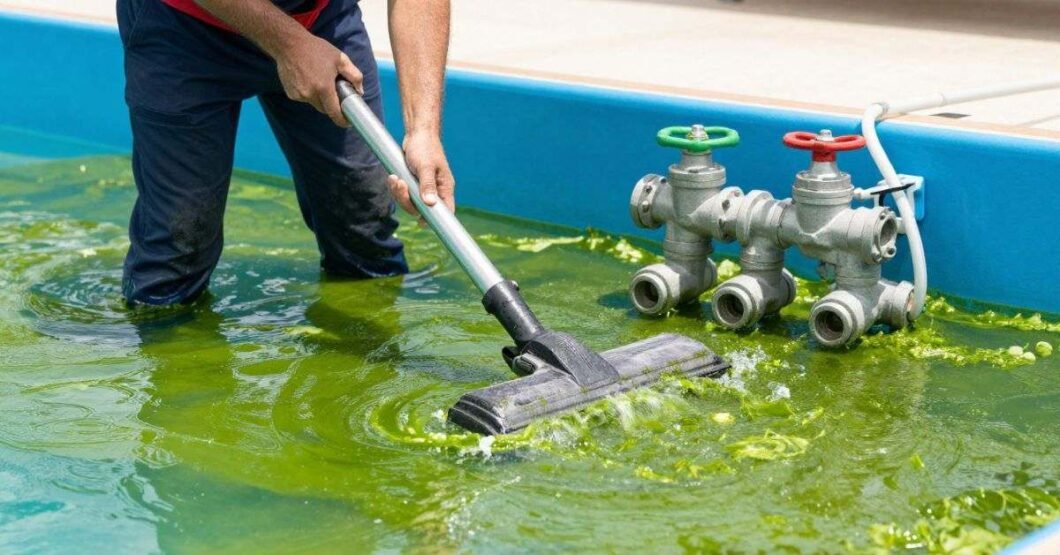
According to pool maintenance professionals, the easiest way to eliminate algae that has settled on the bottom of your pool is to bypass the filter and Algae Vacuum from the pool to waste. This prevents spores from recirculating through the filtration system and spreading again.
In this complete guide, you’ll learn exactly how algae vacuum works, when to bypass the filter, what tools you need, common mistakes to avoid, and expert-backed techniques for crystal-clear water. Whether you’re dealing with light green dust or heavy black algae buildup, this step-by-step resource will help you fix the problem efficiently and safely.
What Is an Algae-Vacuum?
An Algae Vacuum is a pool vacuuming method designed specifically to remove settled algae debris directly from the pool floor rather than circulating it back through the filter.
It can be:
- A manual vacuum head attached to a telescopic pole
- A suction-side cleaner with a multiport valve
- A robotic cleaner with waste discharge functionality
Featured Snippet Definition:
An algae-vacuum is a pool cleaning method that removes algae from the pool floor by directing water and debris out through the waste line instead of the filter system.
Unlike standard vacuuming, this method prevents fine algae particles from re-entering circulation.
Professionals recommend vacuuming slowly and deliberately to avoid stirring the algae back into suspension.
Why Vacuuming to Waste Works Better Than Filtering
When you vacuum normally, water flows through the filter before returning to the pool. The problem? Fine algae spores often pass through sand or cartridge filters.
Vacuuming to waste:
- Sends algae directly out of the pool system
- Prevents filter clogging
- Reduces recirculation
- Speeds up cleanup time
Comparison Table
| Method | Removes Algae Fully | Risk of Recirculation | Water Loss |
| Normal Vacuum | Partial | High | Low |
| Vacuum to Waste | Complete | Very Low | Moderate |
Yes, water loss is higher—but the long-term effectiveness makes it worth it for heavy algae cases.
Types of Pool Algae and How They Affect Removal
Understanding algae types helps determine the best cleaning strategy.
Green Algae
- Most common
- Floats or settles lightly
- Easiest to Algae Vacuum
Mustard Algae
- Yellowish
- Clings to walls
- Requires brushing before vacuuming
Black Algae
- Root-like structure
- Embeds into plaster
- Requires aggressive brushing + shock treatment
Each type requires slightly different chemical preparation before mechanical removal.
Step-by-Step: How to Vacuum Algae to Waste
Here’s the professional method pool technicians follow:
Step 1: Shock the Pool
Add chlorine shock and let it settle algae at the bottom overnight.
Step 2: Set Multiport Valve to “Waste”
Turn off the pump before adjusting the valve.
Step 3: Prime Algae Vacuum Hose
Remove air by submerging the hose fully.
Step 4: Algae Vacuum Slowly
Move steadily to avoid disturbing sediment.
Step 5: Monitor Water Level
Stop before water drops below the skimmer.
Step 6: Refill Pool
Bring water back to the proper level before restarting the filter.
Image Suggestion: Diagram of multiport valve positions (Credit: Manufacturer manual or public pool guides)
Equipment Checklist for Proper Cleaning
Proper tools make algae removal easier and safer.
| Tool | Purpose |
| Telescopic pole | Reach pool bottom |
| Vacuum head (weighted) | Maintain floor contact |
| Vacuum hose | Suction line |
| Multiport valve | Waste setting control |
| Pool test kit | Balance chemicals |
Optional:
- Leaf rake
- Pool brush
- Submersible pump (for heavy cases)
Using proper weighted heads helps prevent algae clouds.
Comparing Algae Vacuum-to-Waste vs Normal Filtration
Let’s compare efficiency:
| Factor | Filter Method | Waste Method |
| Cleanup Speed | Slower | Faster |
| Filter Strain | High | Low |
| Algae Recurrence Risk | Medium | Low |
| Water Usage | Efficient | Higher |
Most pool experts recommend vacuuming to waste after heavy shock treatment.
Chemical Preparation Before Vacuuming
Chemical balance is critical before mechanical removal.
Ideal levels in 2025 pool care standards:
- Free Chlorine: 10–15 ppm (after shock)
- pH: 7.2–7.4
- Alkalinity: 80–120 ppm
Brushing walls before vacuuming ensures algae detaches and settles.
According to CDC pool safety guidelines (cdc.gov), maintaining correct chlorine levels significantly reduces algae growth risk.
Common Mistakes Pool Owners Make
Avoid these errors:
- Vacuuming too quickly
- Not shocking beforehand
- Forgetting to monitor water level
- Restarting filter without backwashing
- Ignoring dead algae residue
Rushing the process often leads to cloudy water returning within days.
Preventing Algae from Returning
Prevention saves time and money.
Weekly maintenance:
- Test water chemistry
- Brush walls and steps
- Run pump 8–12 hours daily
- Maintain chlorine levels
Monthly:
- Deep clean filter
- Inspect circulation system
- Shock after heavy rain
Sun exposure and poor circulation are major algae triggers.
The trends in pool maintenance for 2025 include smart tools and techniques.
Modern technology has improved algae management.
Trending tools:
- Smart pool monitors
- Automated chlorine feeders
- Robotic vacuums with debris sensors
- AI-powered pool testing apps
Forbes Home (2025 edition) reports smart pool systems reduce algae recurrence by 34% when used consistently.
These systems complement manual vacuum-to-waste methods but do not replace them for severe outbreaks, as manual methods are still necessary to effectively remove large amounts of algae and prevent further contamination.
FAQs
Should I always vacuum algae to waste?
Only for heavy or settled algae; light cases may filter normally.
Will vacuuming waste empty my pool?
No, but the water level will drop and must be refilled.
Can cartridge filters vacuum to waste?
Not directly; you may need a bypass setup or submersible pump.
How long after shocking can I vacuum?
Typically 8–12 hours once algae has settled.
Is robotic cleaning enough for algae?
For light growth, yes; heavy outbreaks require manual waste vacuuming.
Conclusion
Using an algae-vacuum method that bypasses the filter and directs water to waste remains the most effective way to remove settled algae in 2025. While it uses more water, it prevents recirculation, reduces filter stress, and dramatically improves clarity.
If your pool floor is covered in green dust or stubborn buildup, don’t rely solely on filtration. Shock properly, vacuum slowly to waste, and rebalance chemistry afterwards.